 lefteros
LEFTEROS / PERSONAL NOTES
The OnePlus Greece community — invites, the One, and a Greek home
5 April 2015 / Lefteris Iliadis / SomniusX
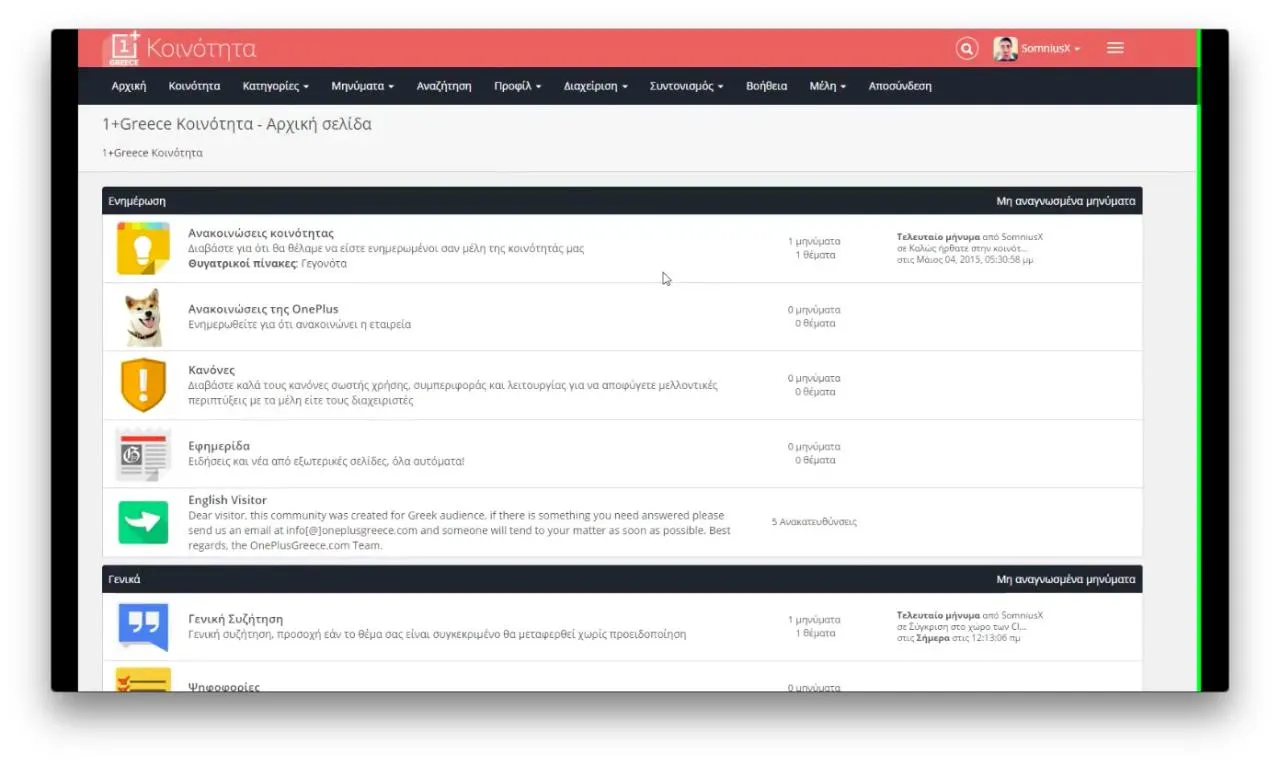
Community screenshot — source: image archive on my LinkedIn profile.
On 5 April 2015 oneplusgreece.com was live. The domain is gone now. What remains is the Wayback Machine capture and the memory of the people who were in it. For me that stretch of time was a big deal: a Greek community around a phone you could not pick off a shelf, and translation work for the company itself that had to stay quiet while it ran.
The site was called 1+ Greece. Its information page said plainly that it was not affiliated with OnePlus the company. Device owners built it for device owners: guides, news, tips, a place to talk without waiting for an official bulletin. The idea was @JeisBlack's; the implementation was mine, as @SomniusX, co-owner. There were Google+, Facebook, Twitter (@OnePlusGreece) and a YouTube channel. On a phone we also used Tapatalk — the forum in a pocket, with notifications and a fast reply.
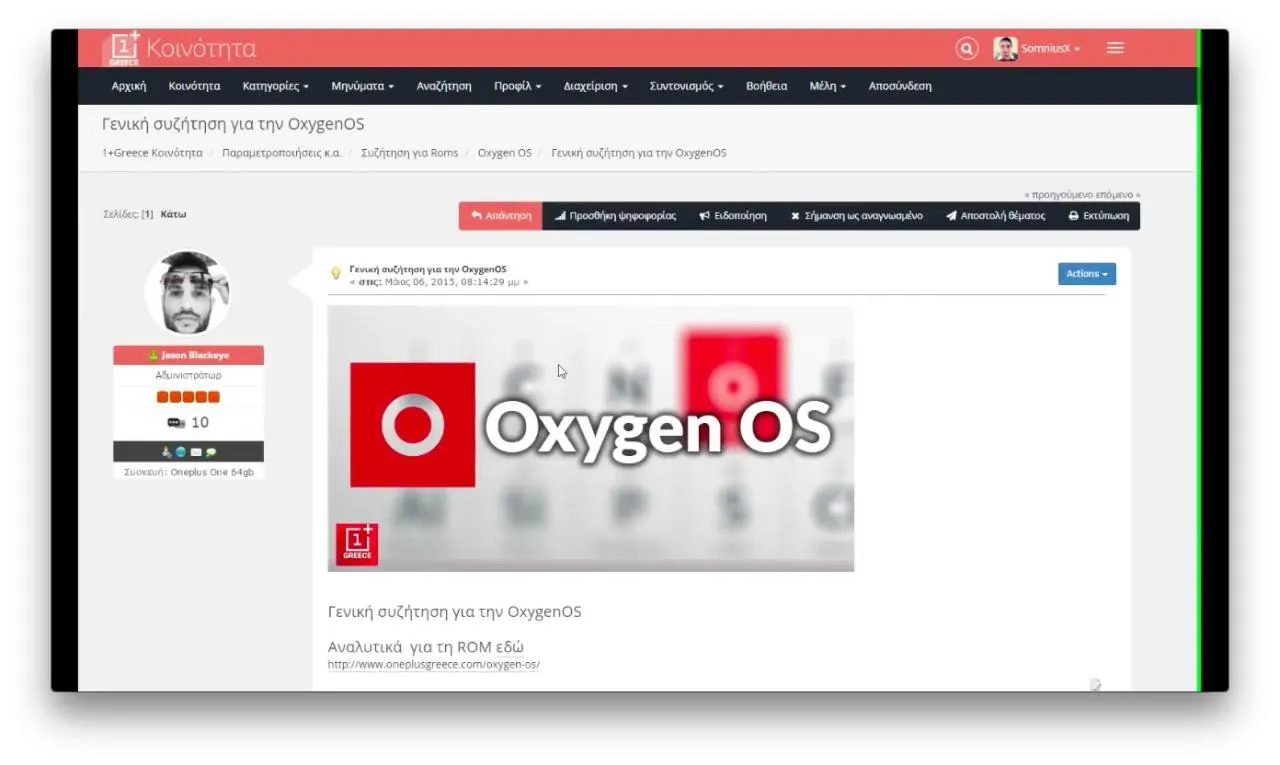
How the site looked at the time — source: image archive on my LinkedIn profile.
Invites, not a shop window
The OnePlus One had launched in 2014 with CyanogenMod 11S. You did not buy it like an ordinary Android in Greek stores. You needed an invite. Without one you were left with scalpers, at prices that had nothing to do with the official about $300 invite offer (around $299 for 16 GB, $349 for 64 GB; in Europe close to €269 / €299). With an invite you got a handset that was fully specified for its moment: a large screen, enough memory, an unlocked bootloader, and an XDA scene writing ROMs and modifications as if there were no tomorrow.
The Greek community did what the market was not doing: it shared invite codes. Not as a business. As people who wanted others to get the same phone without paying a middleman. On 10 March 2015 there was also an official presence in Greece; on 20 April the invite programme ended worldwide. 5 April sits exactly inside that window.
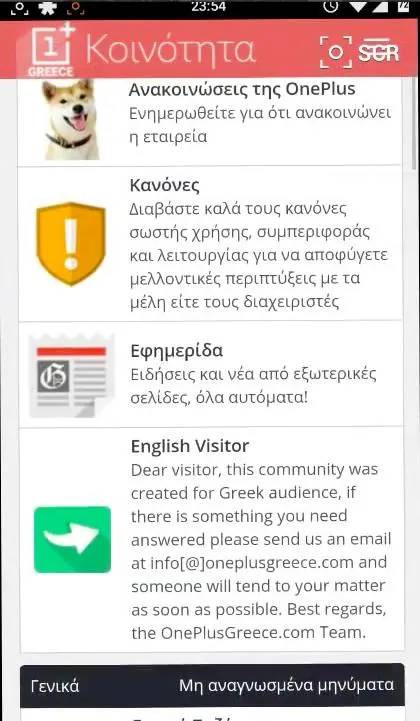
Mobile view with Tapatalk — source: image archive on my LinkedIn profile.
The August 2015 capture shows what the site talked about afterwards: CyanogenOS 12.1 for the One, unofficial CM 12.1 for the OnePlus 2, ColorOS cameras, recovery, root, themes. The tags included words such as invites, roms, cyanogen, guides. The information page also carried the reminder every serious modification community keeps: whatever you do to your device is your responsibility; keep backups.
Translating for the company
At the same time I was on the official OnePlus translation team. There was a confidentiality agreement. I do not reproduce its text here, nor specifications or legal pages from before they were published. Once the material went out officially in Greek — hardware characteristics on the public site, the privacy policy and the other public legal documents — the translation had passed through our hands. That is all that needs to stay on the record: work that appeared on the public site, not drafts that stayed closed.
For someone who was already writing Greek into ROMs and forums, that trust counted. The invite-only phone had, for a while, Greek that I had touched before the world saw it in a shop.
What remains
oneplusgreece.com closed. Wayback still holds the information page of 27 August 2015. The three pictures are from my own LinkedIn archive. The NDA document is not published here.
Anyone who passed through that community knows the tone: a bit of forum, a bit of mutual aid, a lot of Cyanogen. For me it was one of the moments when the Greek corner of Android did not wait for a translation from somewhere else.
Sources
- Information | 1+ Greece, Wayback capture (27 August 2015)
- Public OnePlus One release history (2014 invites, Greece presence March 2015, invite programme ended 20 April 2015)