 lefteros
LEFTEROS / PERSONAL NOTES
Omarchy on my Pixel 8 Pro: first boot, and what's left
31 October 2026 / Lefteris Iliadis / SomniusX
Omarchy Mobile is Derek Ross's project to run real Omarchy on a phone: Arch Linux ARM, Hyprland and a mainline kernel, directly on the device. Its reference phone is the Pixel 7 Pro. The Pixel 8 Pro (codename husky) is a community port led by Brett-Michael Green, and I had a spare one running GrapheneOS, so today I asked on the tracking issue how to help.
To be clear about my part: the port is their work. So far I'm a second phone and a second pair of eyes.
How the day went
I started read-only, checking what state the phone was really in. Then I unlocked the bootloader, which wipes the phone, and reflashed GrapheneOS to slot A. It stays there as the way back. Omarchy only ever goes on slot B and userdata.
Then came the desktop side: the kernel, modules, boot images and a 2.8 GB root image, all built here, with signed packages from the project's development channel.
Before installing anything, I booted a read-only storage probe. That turned out to be the useful part. The port's first phone has a Samsung 128 GB UFS 3.1 chip, and mine has a Kioxia 256 GB UFS 4.0 one. The link came up at HS-G4 on two lanes with the existing driver, all 62 partitions showed up, and the guard kept everything read-only except the six partitions it's meant to allow. So the install path isn't tied to Samsung's chip. According to the issue, this is the first UFS 4.0 husky. While in there I took a checksummed read-only backup of the calibration partitions.
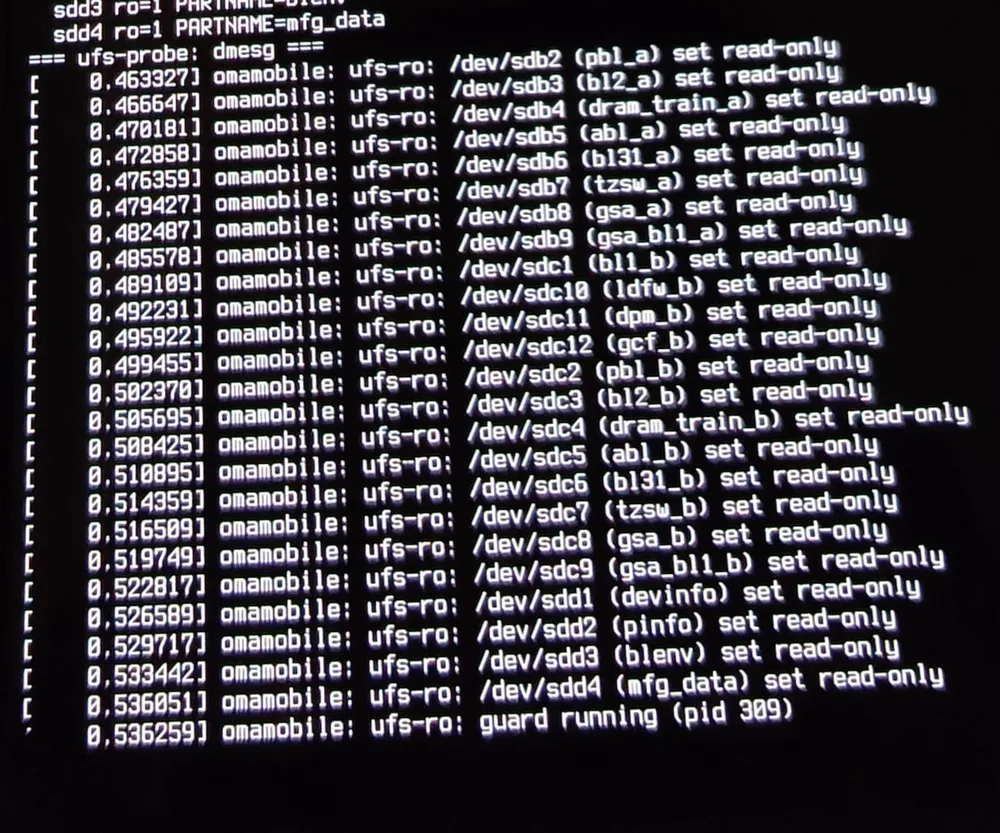
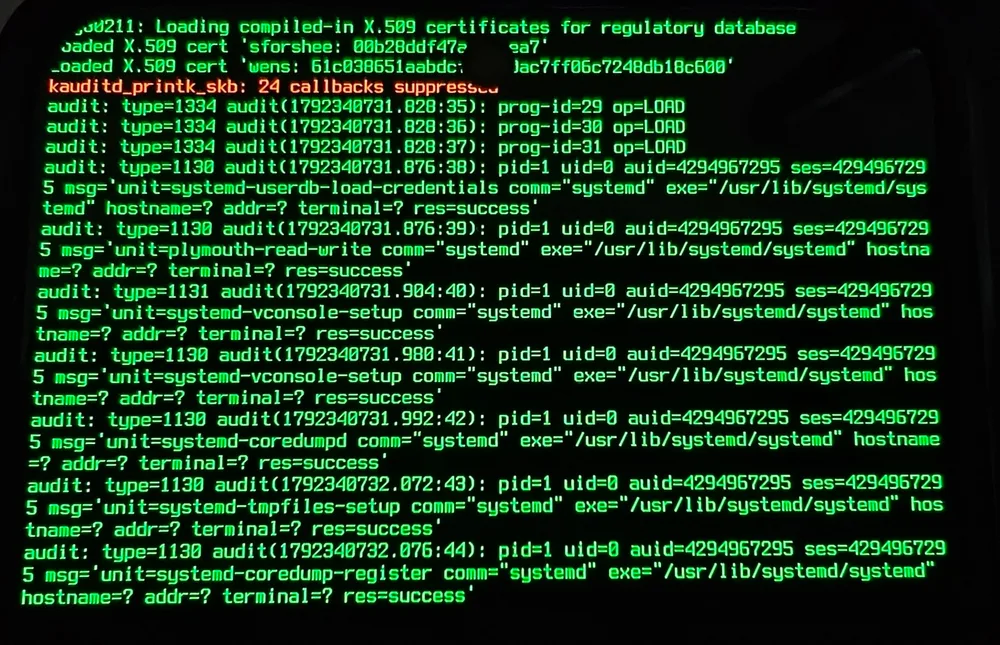
Left: the probe's dmesg, with the guard setting partitions read-only. Right: the green systemd console during the first Omarchy boot.
Then the real install: about three and a half minutes, slot B active, reboot. And Omarchy came up.
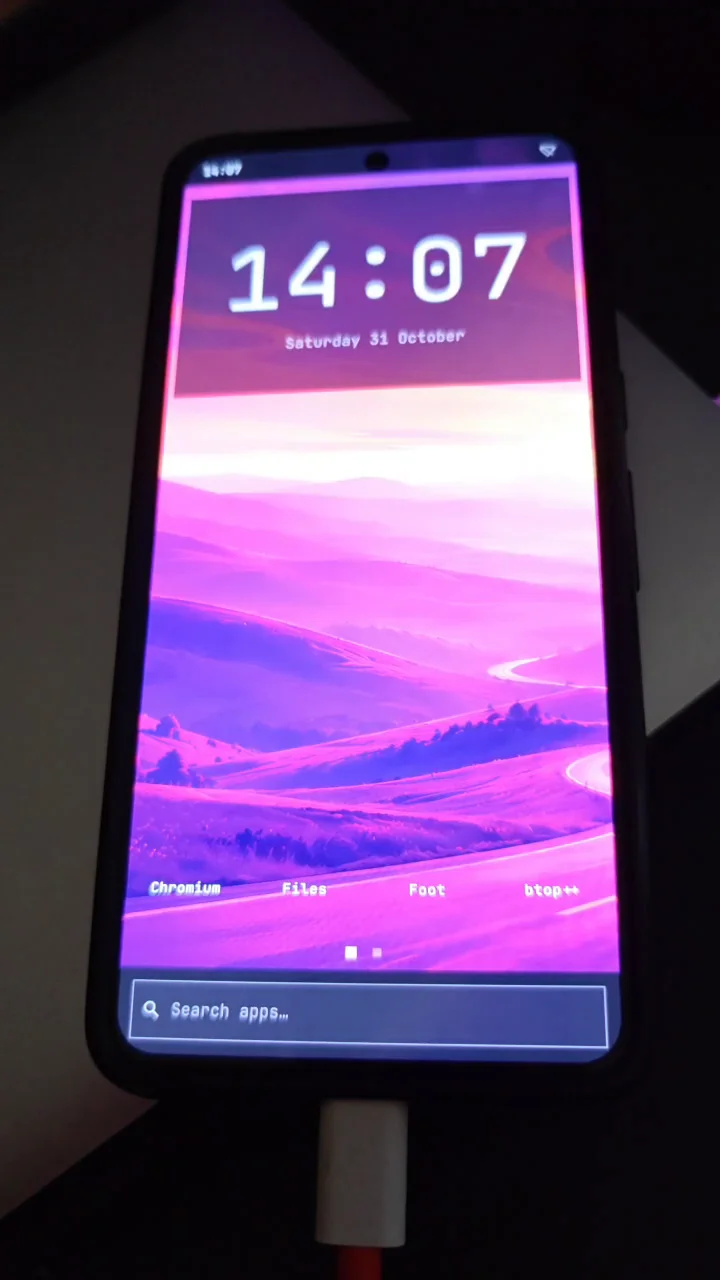
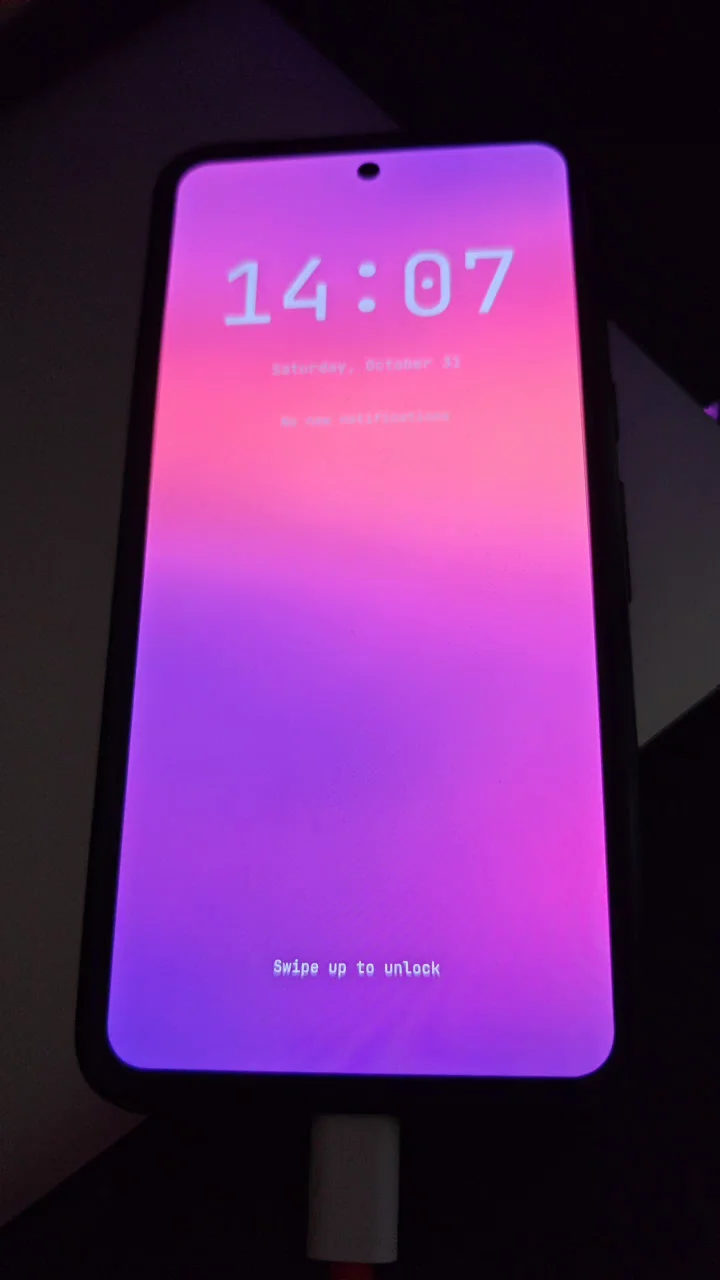
Photos of the phone, from my first video of it running.
What works and what doesn't
- Works on my phone: booting from slot B, storage, SSH over USB, and the login into Hyprland with Omarchy's shell.
- Not yet in the build I installed: touch and the buttons. My swipes on the lock screen do nothing, so I work over SSH. Both are in open pull requests.
- Not implemented on the port yet: the project's notes list GPU, Wi-Fi, Bluetooth, battery and charging, audio, cameras, modem and more as not done. The display is a plain framebuffer for now. omamobile.org has the current map.
Two problems so far
The clock. The phone has no working clock at first boot, so it started at 18 October. That is older than the release signing key, so the key was skipped. It's a known issue, I'd been warned about it, and I still forgot. Setting the date and importing the keys again fixed it.
The black screen. About 40 seconds after the session starts, the panel goes off. Restarting the login manager brings it back for another 40 seconds. Hyprland's log shows renderer errors from the start, but I haven't found what turns the output off, so I don't know the cause yet. I've posted the details on the issue, and I don't know yet whether it happens only on my phone.
What's next
On Brett-Michael Green's test kernel, with the touch and button drivers from the open pull requests, the three keys produce key events and raw touch events land in the right corners. That's at the input level only: I haven't seen the interface respond to a tap yet, and the screen still goes black after about 40 seconds. Next I'd like to find the cause of the black screen, record this phone in the port's notes, and review the open pull requests. One idea for later is Greek on the on-screen keyboard.
It's far from a daily phone, and this isn't one to try on a phone you need. If you have a Pixel 8 Pro to spare, though, the port needs more of them. I'll keep the project page up to date.
Thanks to Derek Ross for the project and to Brett-Michael Green for the port and the patient answers.