 lefteros
LEFTEROS / PERSONAL ARCHIVE
 Beta
Omarchy Mobile on the Pixel 8 Pro — testing a community port
31 October 2026 / Lefteris Iliadis / SomniusX
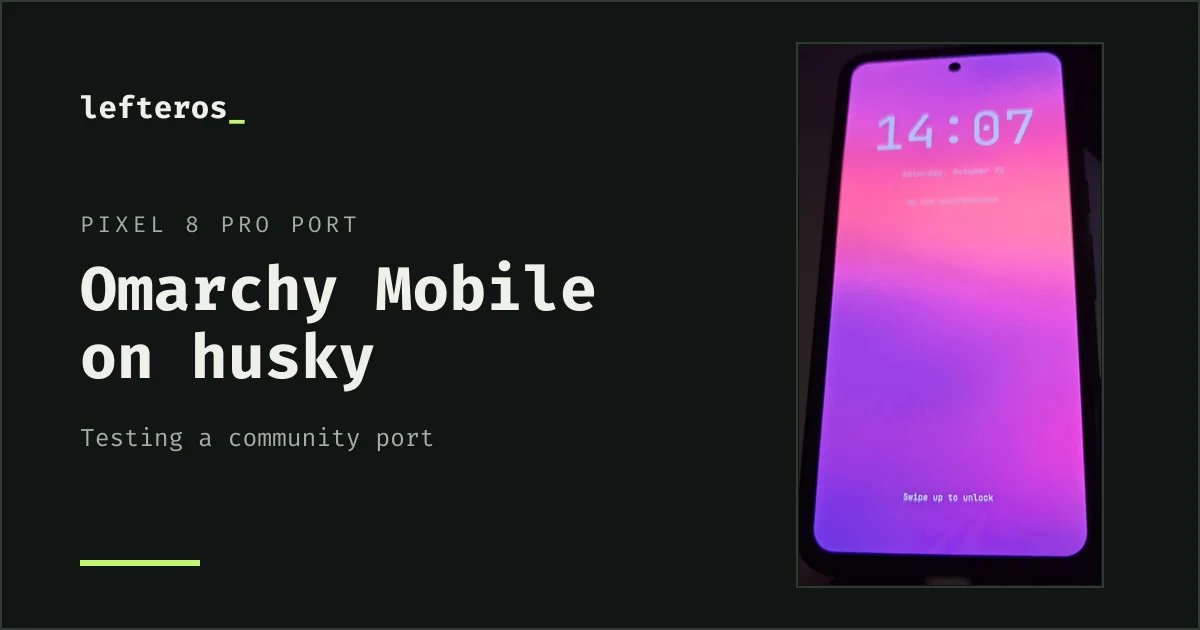
Omarchy Mobile runs real Omarchy on a phone: Arch Linux ARM, Hyprland and a mainline kernel. It's Derek Ross's project, and the Pixel 8 Pro (husky) port is led by Brett-Michael Green. This page isn't my app. It tracks my part: testing the port on a second Pixel 8 Pro and helping where I can.
Where it stands on my phone
Status on 6 November 2026: early work, not a usable phone yet. Everything below is on my phone, not in a release: Wi-Fi and the display on Brett's test kernel, sound on my own test branch built on it, and some of it still in review.
- Works: boot from slot B, storage (Kioxia 256 GB UFS 4.0), SSH over USB and Wi-Fi, and Hyprland with Omarchy's shell, now drawn on the GPU.
- Wi-Fi: 5 GHz, 41 timed downloads over 40 minutes, 221 to 502 Mbit/s, 367 on average, no drops. Brett's earlier baseline was 2.4 GHz.
- GPU and display: the Mali-G715 runs, and the display runs at 120 Hz with brightness.
- Touch and keys: touch in the interface, the keys, and waking the screen with Power or a tap.
- Battery: percentage, voltage, current and temperature read, with the right battery model.
- Charging: the fuel gauge reported about +1.49 A on a Baseus 30 W charger over USB-C to USB-C, in a run of about 3.5 minutes with the screen off. It isn't confirmed with an external meter yet, and I don't claim fast charging.
- Type-C: the driver loads as a power sink, sees a 3 A source, keeps USB and Wi-Fi up, and survives a cable replug. The charger's input limit now follows it. It's still loaded by hand, and no USB Power Delivery contract has been tested.
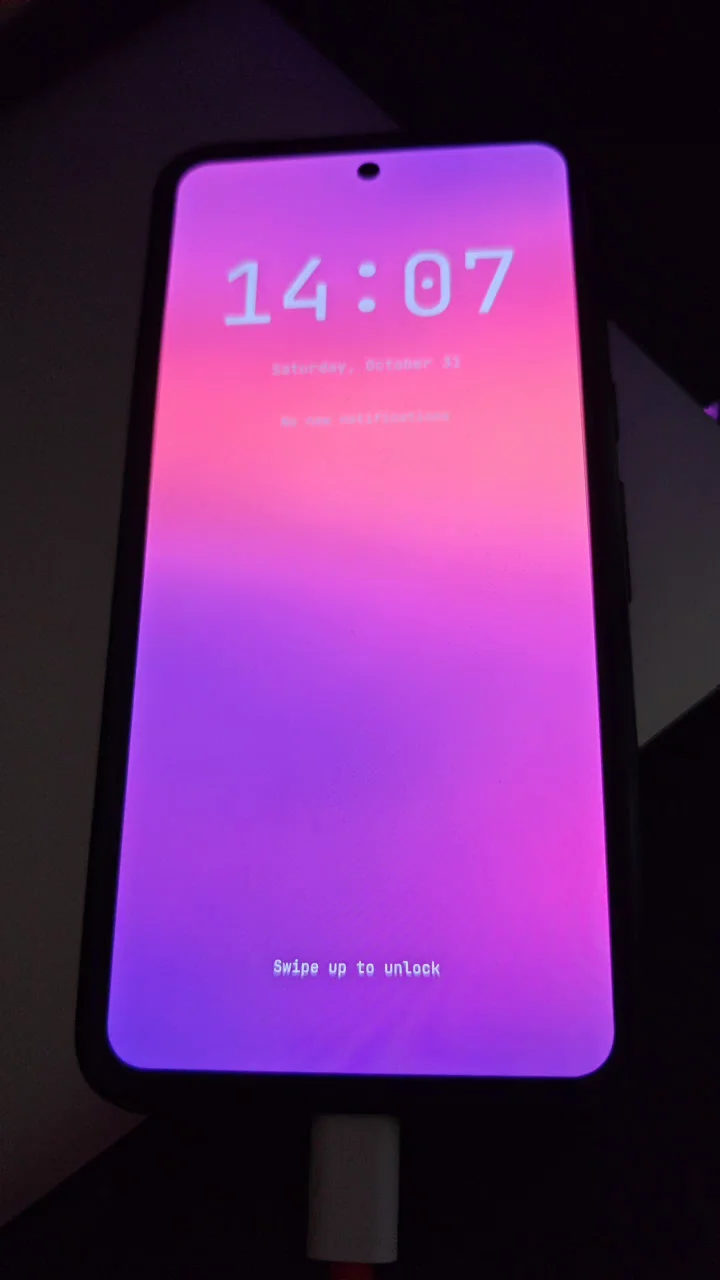
- Boot and small things: the Omarchy splash and a much shorter wait for the lock screen, with local changes on my phone. Battery on the lock screen and a trial English/Greek key too, the key with one crash I couldn't reproduce.
- Sound: both speakers play, from a test tone to YouTube in Chromium through PipeWire, and the sound stack starts by itself at boot. Levels are capped at the Pixel 7 Pro's safe
mediastage until the 8 Pro has its own limits. No microphones yet. - Bluetooth, haptics and the torch: headphones over Bluetooth, the vibration motor and the rear LED all worked on separate test kernels. On the combined kernel from #199 and #200 I've only checked that they probe.
- Heat and idle power: thermal limits make it throttle earlier, but with the screen off it drew about 520 mA when I measured it, most likely because power domains and deep CPU idle aren't managed yet. Open.
- Video: no hardware decoding in Chromium yet; YouTube is asked for H.264, which should be lighter on the CPU (not measured yet).
- Host mode: the USB role switches, but there's no 5 V out, so no USB devices yet.
- Not on my phone yet: microphones, cameras, suspend, the modem (as on the 7 Pro), and USB host mode. The device map has the current state.
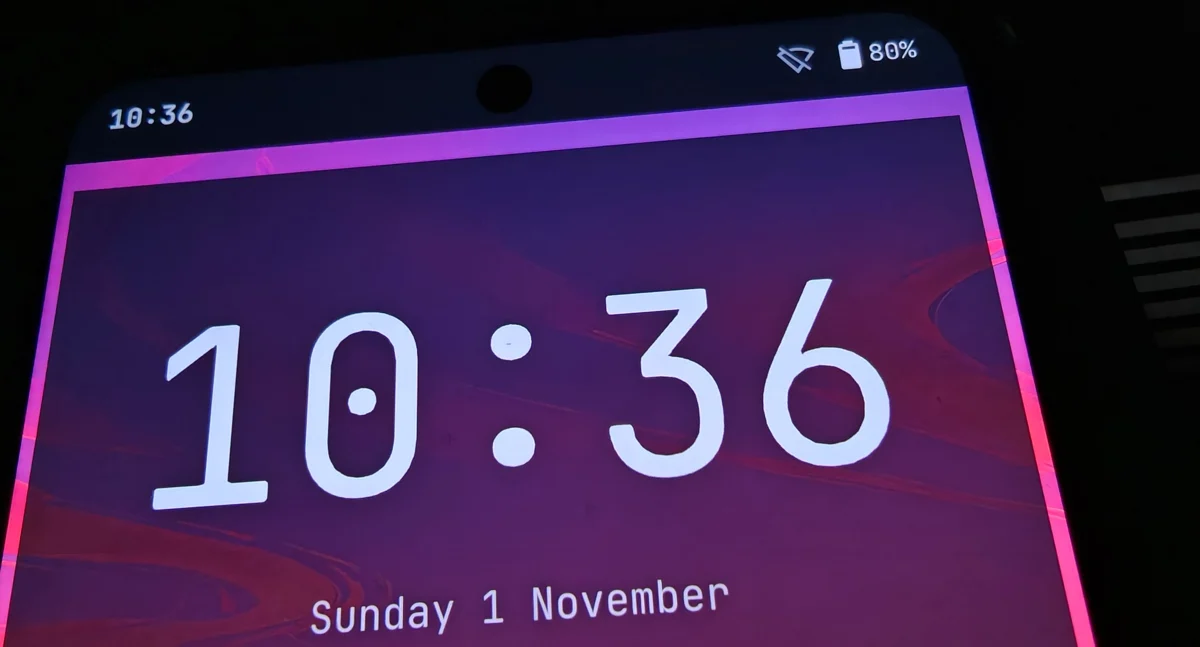
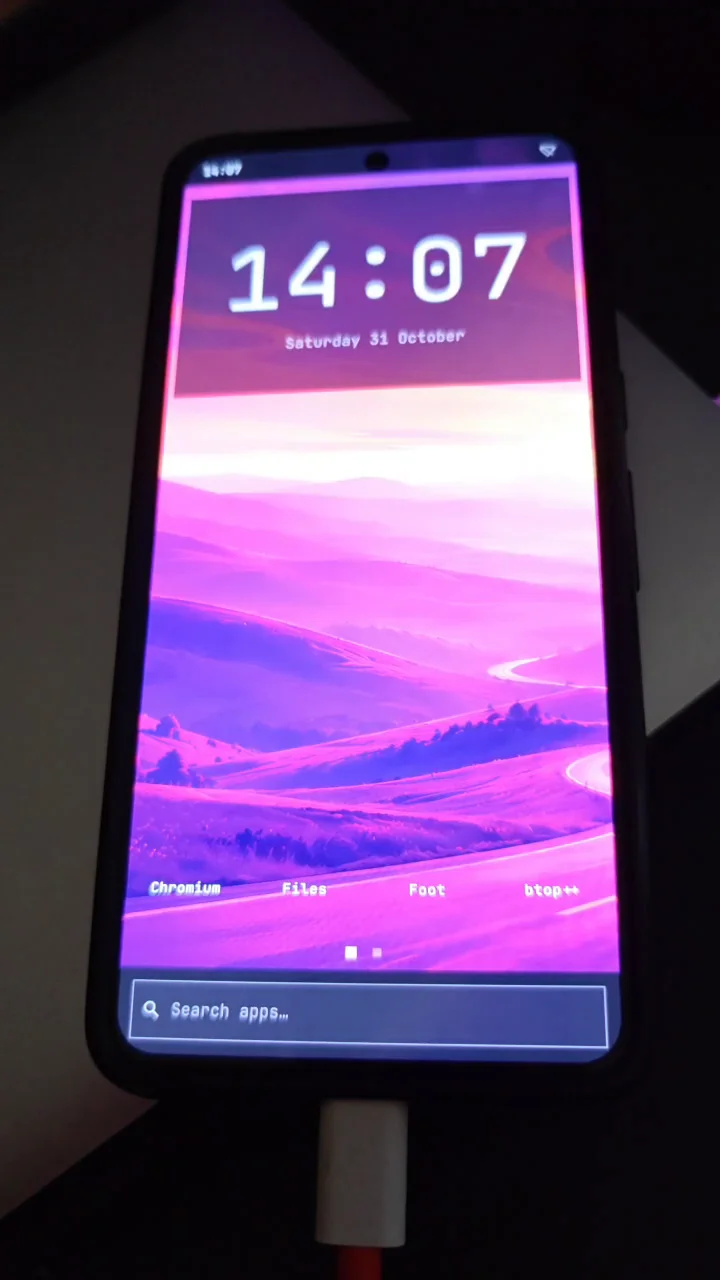
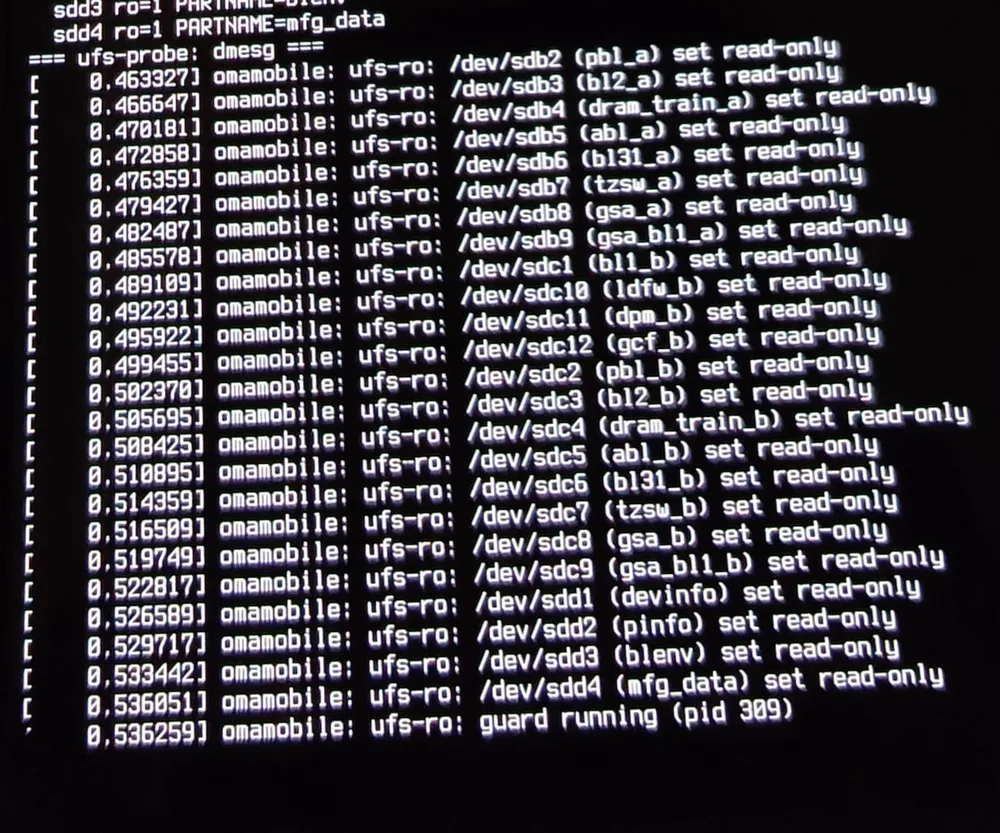
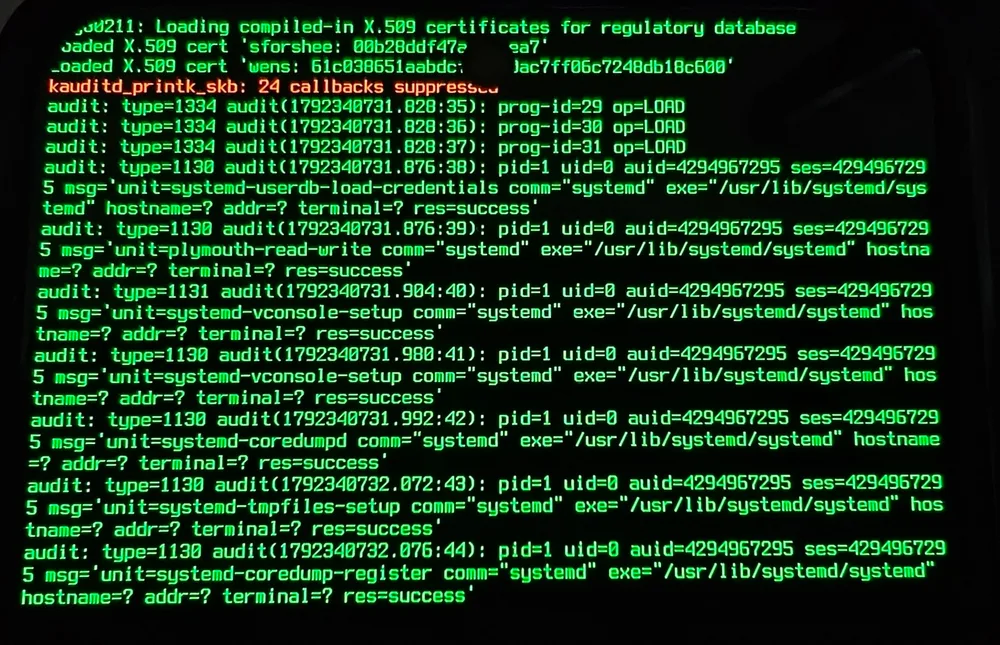
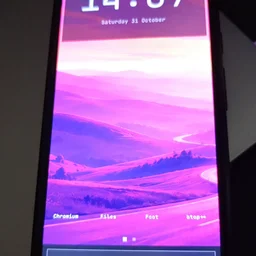
Left: the probe's dmesg, with the guard setting partitions read-only. Right: the green systemd console during the first Omarchy boot.
What I've done so far
Confirmed that the install path works on UFS 4.0, on a storage chip the port hadn't seen.
Installed Omarchy with GrapheneOS kept on slot A as the way back.
Reported the first-boot clock problem and traced the black screen to the lock screen's blank, on the tracking issue.
Got the battery percentage working: clocks, the I2C bus and the MAX77759 (#163, #175, merged).
Found why the on-screen keyboard was so short (#154, merged).
Recorded the second phone in the notes and wrote the Pixel 8 Pro roadmap.
Tested the Wi-Fi, GPU and display work on a second phone, on Brett's test kernel, and brought up the Type-C driver.
Brought up sound: the audio DSP, both speaker amps and PipeWire. The notes are in #450.
Added the 8 Pro's modem and NV partitions to the backup tool (#449) and sent Bluetooth (#199) and haptics with the torch (#200), all open.
Fixed the video and audio stutter while holding a volume key, with a slower key repeat (a local setting on my phone, not upstream yet).
Wrote a runbook for host mode for Derek's review; nothing runs before he says go.
What's next
- Idle power: managing power domains and deep CPU idle, so the phone stops running warm with the screen off.
- The sound changes as proper PRs, and own speaker limits for the 8 Pro.
- Host mode, once Derek reviews the draft and I have a USB-C meter.
- Battery on the lock screen, in review.
- The boot splash, if Derek wants it.
- The modem, once I find a prepaid SIM.
- Later: Greek on the on-screen keyboard.
Rules if you're testing husky
From Derek and Brett, on the tracking issue and in review:
- Keep the charge limits at 4.2 V and 1.485 A.
- No hand writes to the fuel gauge without asking first.
- Re-flash rather than reboot more than twice in a row.
- Anything that sources power, changes charging or loads Type-C at boot needs a runbook that Derek reviews before it runs.
- Generate battery gauge overlays from Google's source, not from another distro's copy.
- Don't replace the Google logo at boot.
- After Derek's review: speaker levels stay at the 7 Pro's
mediastage until husky has its own measured limits. no regulator (mali)in the log is expected, because the firmware sets that power rail.
Posts
- Omarchy on the Pixel 8 Pro: the speakers work, 6 November 2026
- Omarchy on the Pixel 8 Pro: Wi-Fi, 120 Hz and better charging, 2 November 2026
- Omarchy on the Pixel 8 Pro: the battery reads, 1 November 2026
- Omarchy on my Pixel 8 Pro: first boot, and what's left, 31 October 2026